

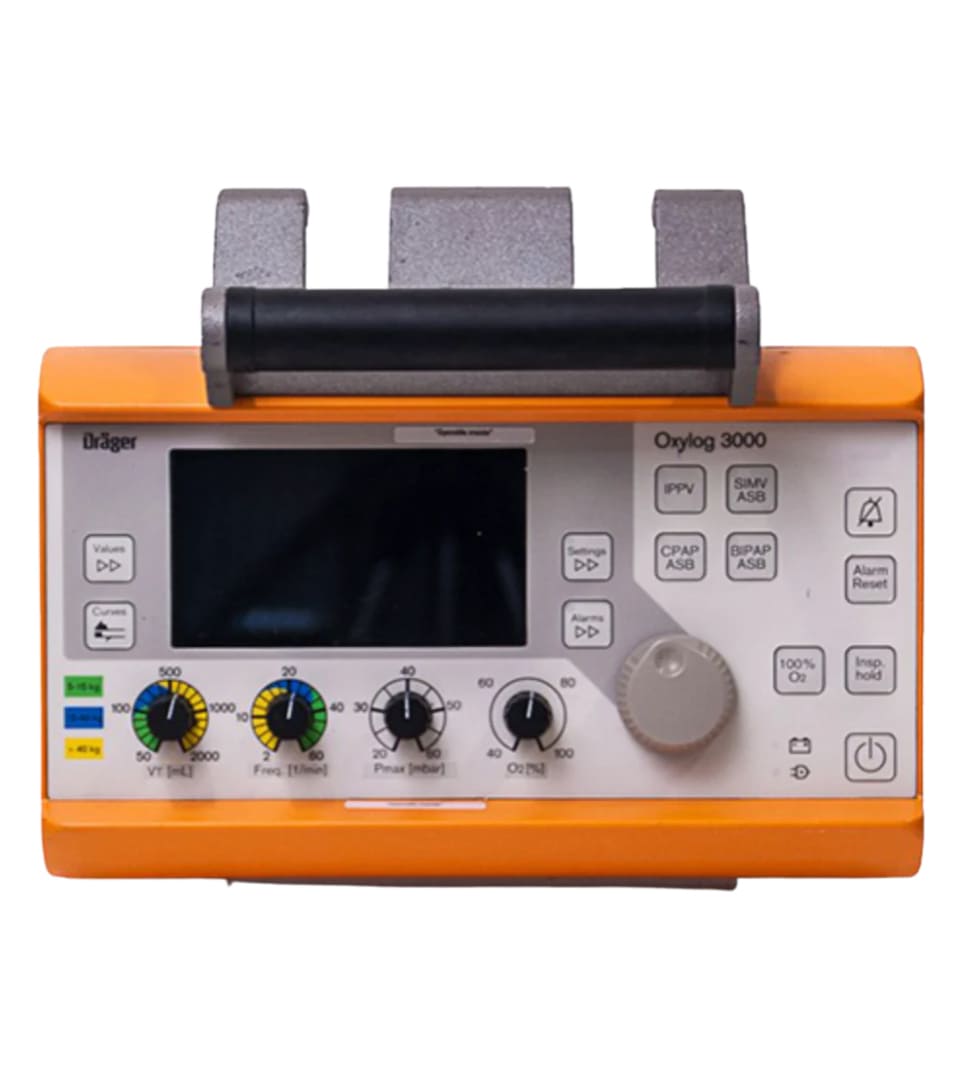

Description
The main technical characteristics of the Draeger Oxylog 3000 ventilator include:
- Modes of operation: The Draeger Oxylog 3000 ventilator has a variety of modes of operation, such as controlled, assisted, spontaneous, breath grips, and others, which allow you to tailor the ventilator to the needs of a particular patient.
- Display: The device is equipped with a bright color display that shows important patient parameters and data, such as respiratory rate, tidal volume, oxygen concentration, and other indicators.
- Oxygen tank: The built-in oxygen tank provides extended runtime without an external oxygen source.
- Fan: The built-in fan provides air delivery with adjustable parameters such as pressure and breath volume. This allows for precise control of the air supply to the patient’s lungs.
- Monitoring: The Draeger Oxylog 3000 has the ability to monitor and record various patient parameters, including ventilation, electrocardiogram (ECG), and blood oxygen levels.
- Weight and portability: Thanks to its compact design and light weight, the Draeger Oxylog 3000 is portable and easy to use in a variety of settings, including patient transportation.
- Autonomy: The ventilator has a built-in lithium-ion battery that ensures autonomous operation of the device for a long time without being connected to a power source.
- Audio and visual alarms: The Draeger Oxylog 3000 is equipped with audio and visual alarms to alert medical staff to important events and emergencies.
- Parameter settings: Professional operators can customize various ventilator parameters, including breathing rate, inspiratory/expiratory ratio, pressure, and tidal volume, to ensure optimal treatment.
- Compatibility with additional equipment: The Draeger Oxylog 3000 is compatible with a variety of optional accessories, such as heart rate monitors, cardiographs, and others, to extend its functionality.


