
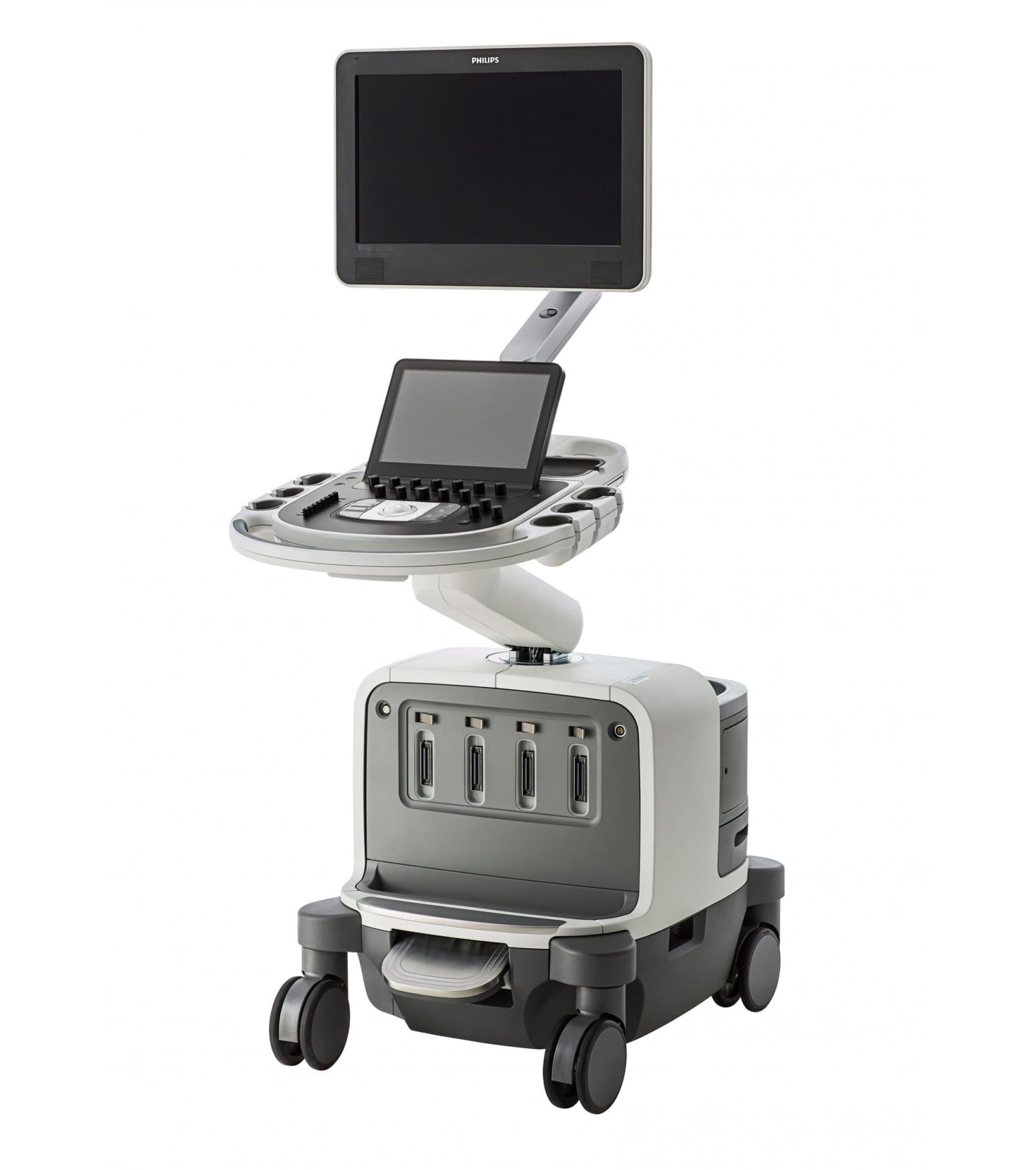

Description
Main technical characteristics of Philips EPIQ 7:
- Sensors: The device is equipped with a wide range of transducers of different types and frequencies, which allows performing ultrasound examinations of various organs and systems.
- PureWave crystals: Utilizing unique PureWave crystals, the device delivers high resolution and sharp images for accurate diagnosis.
- xMATRIX technology: EPIQ 7 features xMATRIX technology, which provides detailed 2D and 3D images of the heart, including real-time echocardiography.
- nSIGHT Imaging: This technology enables high quality ultrasound images with a large penetration depth and reduced motion artifacts.
- Elasticity Imaging: The device supports the Elasticity Imaging function, which allows you to evaluate tissue elasticity and detect pathological changes.
- Live 3D Echo: EPIQ 7 provides the ability to obtain real 3D images of the heart with a high refresh rate, which helps to clarify the diagnosis and plan treatment.
- iSmart: The camera uses iSmart technology that automatically optimizes camera settings for the best possible image.
- QLAB: Philips EPIQ 7 has a built-in QLAB platform for image analysis and processing.
- Improved artificial intelligence system (AIUS) for automatic detection and analysis of structures.
- Advanced Doppler capabilities, including high speed Doppler and color Doppler with flow measurement.
- Touch sensors: Some EPIQ 7 sensors are equipped with Touch technology, which allows operators to change parameters in real time by tapping on the image.
- Intuitive interface: The device has a modern, intuitive touchscreen interface that makes it easy to use.
- DICOM compatibility: The EPIQ 7 supports the DICOM standard, which allows for data exchange with other medical devices and systems.
All in all, the Philips EPIQ 7 is a powerful ultrasound machine that combines advanced technology and functionality to provide accurate diagnostics and clinical research. It has extensive capabilities in imaging organs and systems, support for various modes and functions, and an easy-to-use interface for the operator.


