
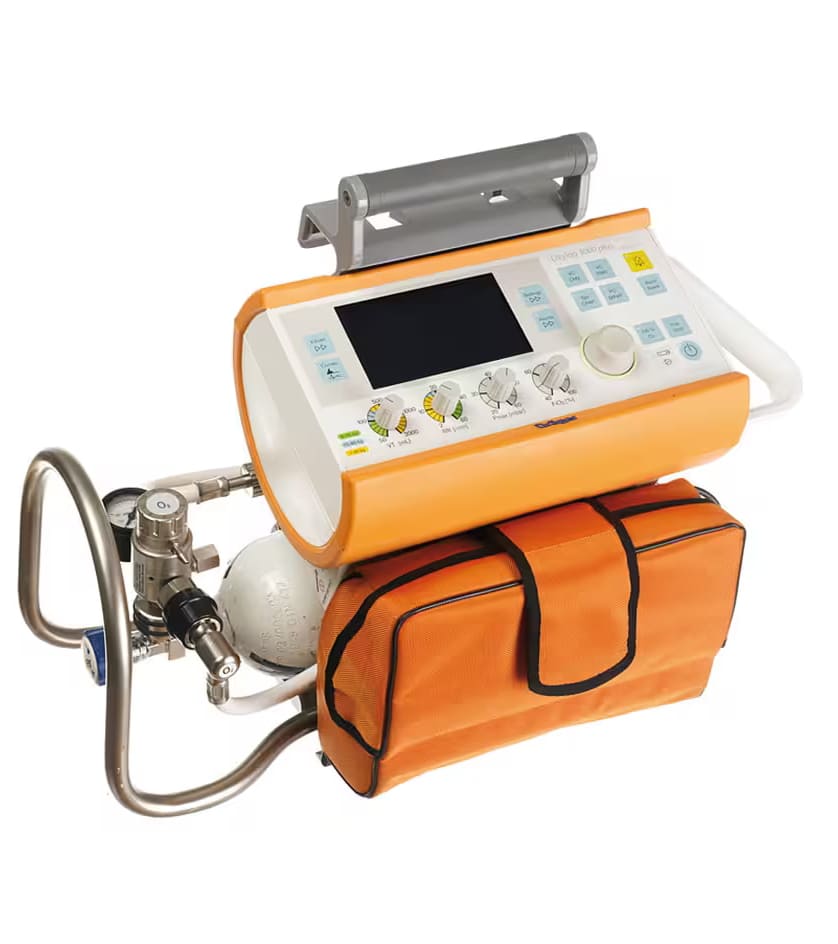
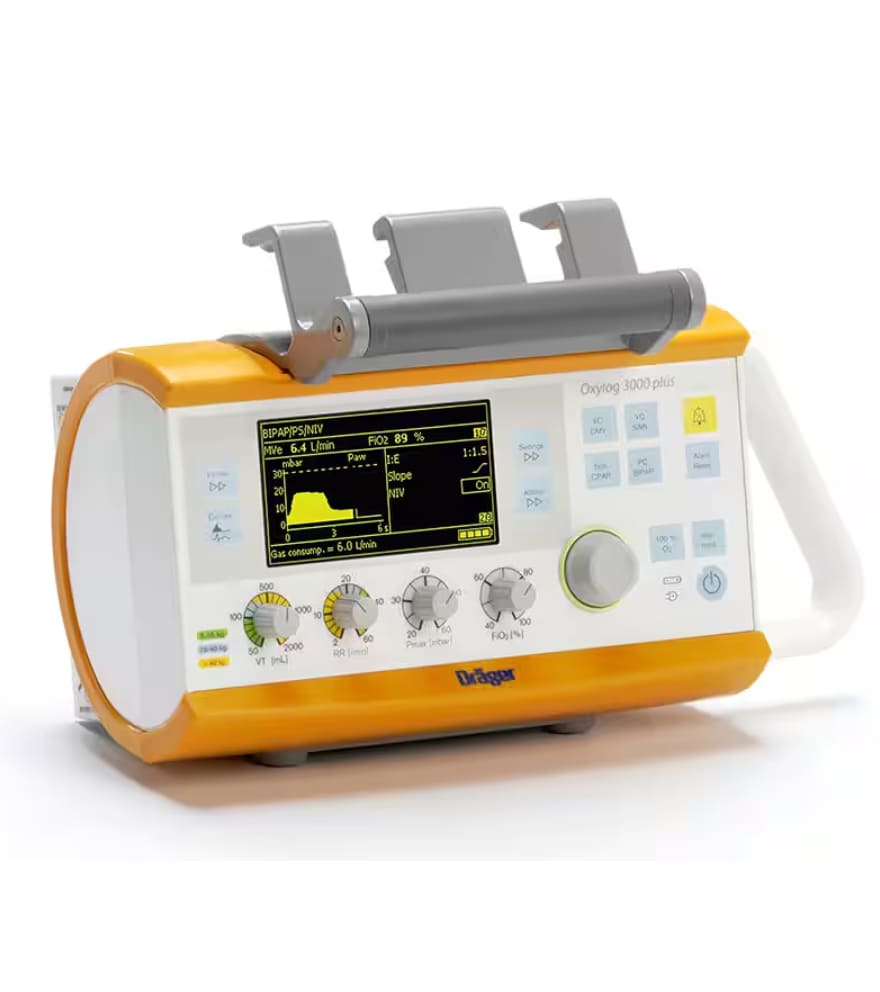

Description
The main technical characteristics of the Draeger Oxylog 3000 plus include:
- Ventilation modes: The Oxylog 3000 plus has an advanced set of ventilation modes, including presets for special cases such as pediatrics and neonatology. It can also operate in Automatic Control Ventilation (ACV) and Synchronized Intubation Ventilation (S-IMV) modes.
- Ventilation parameters: The parameter ranges include tidal volume, tidal frequency, tidal pressure, and I:E ratio. This allows you to customize ventilation according to the patient’s condition and needs.
- Built-in monitoring: The Draeger Oxylog 3000 plus has built-in monitoring of parameters such as respiratory rate, respiratory pressure, and mixed gas oxygen concentration. This allows medical staff operators to monitor the patient’s condition and respond to changes in a timely manner.
- Compact and lightweight design: The Draeger Oxylog 3000 plus has a compact design that makes it easy to carry for emergency care in a variety of settings. This is especially useful during patient transportation.
- Intuitive interface: The device has a simple and intuitive interface that makes it easy for healthcare professionals to use. It is easy to set up ventilation parameters and access the necessary information.
- Power supply: The Draeger Oxylog 3000 plus can be powered by a built-in lithium-ion battery, which ensures long-lasting autonomy. It is also possible to connect to the mains or use a car battery.
The nuances of using the Draeger Oxylog 3000 plus include:
- Training and qualification: Due to its comprehensive ventilation capabilities and modes, proper knowledge and skills in mechanical ventilation are required to use the device.
- Maintenance and technical support: Regular maintenance and checking that the machine is functioning properly are essential to ensure safety and efficiency. Ensuring proper technical support is also important to resolve possible problems.
- Compliance with protocols and standards: The use of the device must comply with medical protocols and safety standards to ensure optimal patient care and minimize risks.
- Availability of backup power sources: It is always recommended to have backup power sources, such as extra batteries or a car battery, to ensure continuity of operation of the machine.


